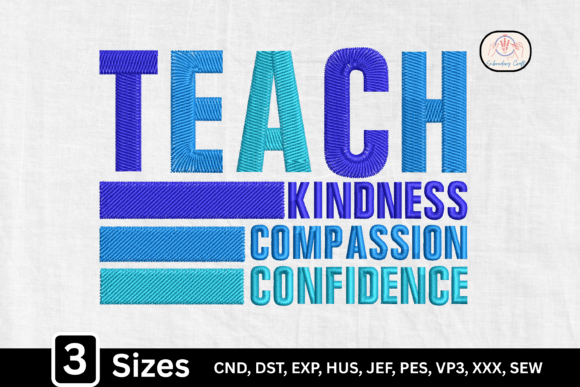
Teach Kindness Compassion Confidence
A Thoughtful Embroidery Design for Boutique Apparel
As an embroidery designer who’s developed collections for boutique apparel brands and small clothing lines over the past decade, I approach every Creative Fabrica embroidery file with a practical eye—not just for aesthetics, but for how it translates on real fabric, in real production. When I first previewed Teach Kindness Compassion Confidence, my instinct was to pause. It’s not flashy or oversized—it’s quietly intentional. The blue gradient teacher stitch gives it warmth without loudness, and the phrasing—“Teach – Kindness • Compassion • Confidence”—carries emotional weight that resonates across age groups and settings. This isn’t just a School category embroidery design; it’s a lifestyle statement stitched with purpose.
Visual Personality & Stitching Mood
The design reads as premium yet approachable: clean line work, balanced spacing between words and bullets, and a gentle rhythm in the letterforms. It avoids cutesy embellishments or overdone flourishes—so it won’t date quickly. The blue gradient suggests calm authority and empathy, making it ideal for educators, wellness brands, and mindful apparel lines. It’s neither ultra-minimal nor heavily decorative—landing firmly in that sweet spot where custom apparel feels handmade but professionally finished. For a boutique brand building visual consistency, Teach Kindness Compassion Confidence delivers tone and texture without demanding attention.
How It Performs Across Apparel Types
Sweatshirt embroidery: On neutral heather grey or oatmeal sweatshirts, this design shines at chest placement—compact enough for standard hoops, yet legible from three feet away. The stitch density feels even, with no overcrowded areas that risk puckering on fleece-backed fabric.
Hoodie design: Works beautifully on the left chest or upper back. Because the phrase flows horizontally, it adapts well to curved surfaces like hoodie hoods or rounded yokes—just adjust hooping tension slightly and use medium-weight cutaway stabilizer.
T-shirt embroidery: Best on structured cotton blends or midweight jersey—not ultra-thin poly-blends. The lettering has enough body to avoid looking fragile, but test first on your exact fabric: some lightweight tees need reduced top tension or a tear-away + cutaway combo.
Denim jackets & tote bags: The clean layout holds up on textured surfaces. On denim, go with matte thread colors (navy, charcoal, soft sky blue) to complement the gradient intent. For tote bags, consider scaling up 5–10%—the design’s proportions support subtle enlargement without losing clarity.
Oversized garments & seasonal layers: On chunky knits or cozy cardigans, place it near the hem or sleeve cuff for unexpected impact. Its restrained scale keeps it from getting lost—or overwhelming—on voluminous silhouettes.
Where to Use It Carefully
This is not a one-size-fits-all embroidery file—and that’s part of its strength. Avoid placing Teach Kindness Compassion Confidence directly over high-stretch zones like side seams or underarm gussets unless you’ve tested stabilization thoroughly. Ribbed fabric (like sweater cuffs or neckbands) requires extra care: use adhesive stabilizer underneath and reduce stitch speed by 20% to prevent skipped stitches in tight curves.
On dark garments, confirm thread color contrast before stitching. The blue gradient implies depth—but if your machine doesn’t support multi-color auto-thread changes, stick to a single rich navy or slate thread for cohesion. Tiny lettering isn’t an issue here—the smallest characters are comfortably above 6mm height, so readability stays strong even at 3.5" width.
Impact on Brand Identity & Customer Connection
For Etsy sellers and small shop product creators, this design does quiet branding work. It signals values—kindness, compassion, confidence—not just aesthetics. That builds buyer trust faster than a logo alone. Customers scrolling lifestyle product photos notice sincerity before symmetry. In social media graphics or printable mockups, Teach Kindness Compassion Confidence adds narrative weight: it tells a story your audience wants to wear.
Commercial embroidery shops report higher repeat orders when designs like this anchor a collection—think matching hoodies for school staff, wellness retreats, or mentorship programs. It becomes recognizable, not generic. And because it avoids trendy fonts or dated motifs, it supports long-term visual consistency across seasons.
Practical Designer Notes Before You Stitch
- Always test on scrap fabric—especially if using stretchy, napped, or ribbed material. Match your stabilizer choice to the garment: cutaway for knits, tear-away for stable wovens, fusible for lightweight linens.
- Review thread color contrast carefully. Even slight shifts in monitor calibration can mislead—hold actual thread next to your fabric swatch.
- Confirm hoop size before digitizing adjustments. While the design fits standard 4x4 hoops, double-check the actual dimensions listed in the Creative Fabrica product details.
- Inspect stitch density in your embroidery software. Look for dense fill areas that may need underlay tweaks on plush fabrics like fleece.
- Test on similar garment fabric—not just muslin. A 100% cotton hoodie behaves differently than a polyester-cotton blend.
- Compare placement options on a physical sample: chest, sleeve, back yoke, or pocket edge. Small shifts change perceived scale dramatically.
- Verify licensing terms on Creative Fabrica before selling finished apparel. This is a digital embroidery file intended for commercial embroidery products—confirm usage rights match your business model.
Final Thoughts for Creative Entrepreneurs
If you’re curating a capsule collection of meaningful, wearable messages—or building a boutique brand rooted in authenticity—Teach Kindness Compassion Confidence earns its place in your library. It’s not background noise. It’s a quiet invitation—to pause, reflect, and choose kindness. As a machine embroidery design, it balances technical reliability with emotional resonance. And in a market saturated with fast trends, that kind of intentionality is rare, valuable, and deeply wearable.