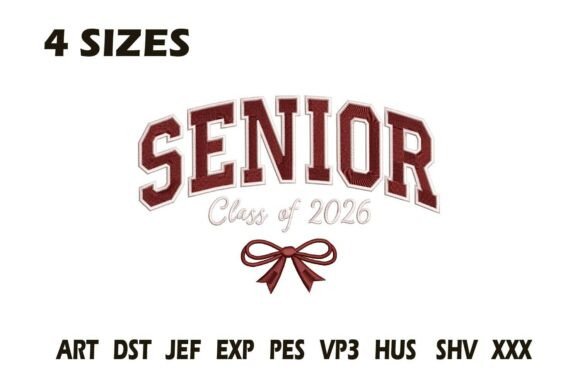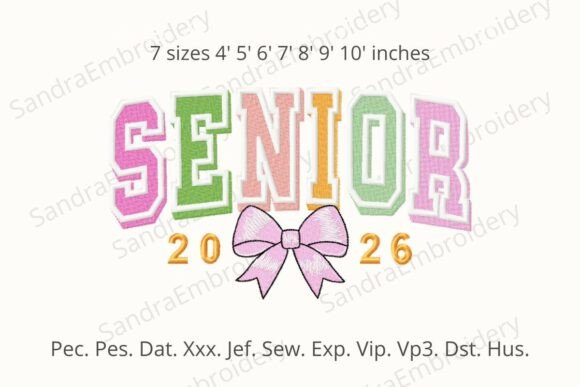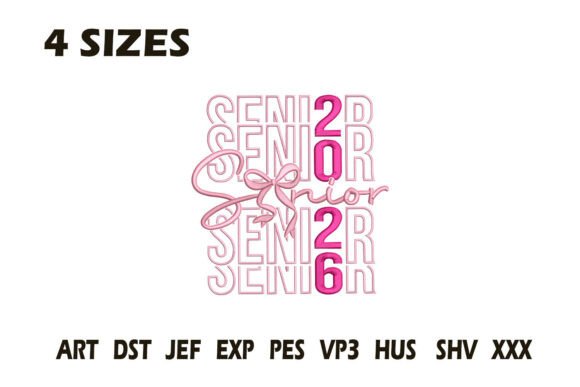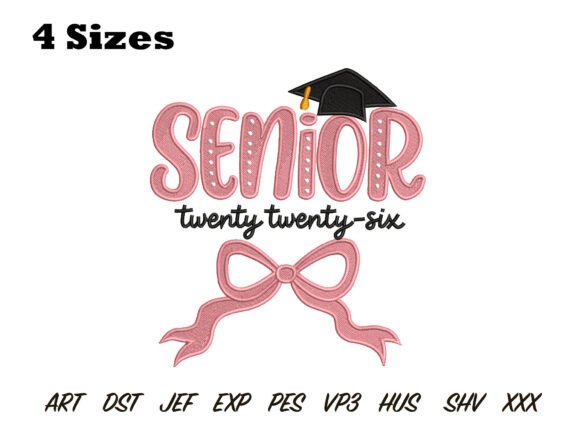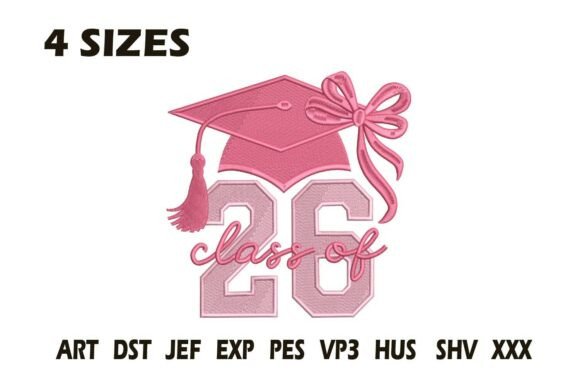
Class of 2026 Graduation Bow Embroidery
A Playful, Purpose-Driven Design for Small Business Merch
As an embroidery designer who’s developed hundreds of commercial embroidery files for small businesses—from neighborhood bakeries to indie florists and student-run boutiques—I approached Class of 2026 Graduation Bow Embroidery with both curiosity and critical intent. The title alone signals a clear audience: schools, graduates, alumni groups, and brands tapping into celebratory energy. But for a small business owner or apparel decorator, the real question isn’t just “Does it look cute?” It’s “Will it strengthen my brand identity, hold up in production, and resonate with customers beyond graduation season?”
First Impression: Friendly, Whimsical—But Professionally Grounded
The description—“Bring a bit of charm to your fabrics with this playful embroidery design”—immediately sets the tone: approachable, lighthearted, and intentionally non-corporate. That’s a strategic strength. Unlike overly ornate or rigid school emblems, Class of 2026 Graduation Bow Embroidery leans into warmth and handmade appeal—ideal for creative studios, pet brands launching “graduation” treats for service dogs, or cafés offering “Class of 2026” specialty drinks. It reads as modern, not dated; elegant, not fussy; and versatile enough to sit beside hand-lettered logos or minimalist monograms.
Real-World Performance Across Business Touchpoints
In practice, Class of 2026 Graduation Bow Embroidery shines where personality meets practicality:
- Embroidered patches: Works beautifully as a sew-on or iron-on accent on tote bags, denim jackets, or staff aprons—especially when paired with a custom tagline (“Proudly Brewed Since 2023” or “Floral & Graduated”). Its balanced proportions prevent distortion at 2.5”–3” patch sizes.
- Apron embroidery and cap embroidery: As a chest logo or side-panel detail, it adds visual interest without overwhelming utility wear. On structured caps, position it slightly above center front to avoid crown curvature issues.
- Tote bag design and custom apparel: Scales well on cotton canvas and poly-blend tees. Because it’s described as “playful” rather than dense or highly detailed, stitch density is likely moderate—reducing puckering risk on lightweight fabrics.
- Product packaging accents and boutique merchandise: Imagine it stitched onto kraft paper gift tags, linen pouches for handmade soap, or even embroidered labels inside reusable produce bags. Its whimsy reinforces authenticity—a key driver for Etsy sellers and craft-based brands.
Where to Use It Thoughtfully (Not Everywhere)
Even charming designs have limits—and recognizing them early saves time, thread, and client trust. With Class of 2026 Graduation Bow Embroidery, proceed carefully on:
- Cap fronts under 2” height: Fine details like bow loops or subtle shading may blur. Always test at actual size before digitizing for headwear.
- Textured fabric or dark uniforms: If the design includes light-colored thread elements (e.g., white satin-stitch bow centers), contrast drops significantly on charcoal twill or corduroy. Confirm thread color options match your fabric palette.
- Items requiring frequent washing: While machine embroidery is durable, high-stitch-density fills can weaken over repeated laundering. Review the embroidery file’s fill structure—if it’s heavy satin or dense tatami, consider simplifying for aprons or staff shirts.
- Curved surfaces and tiny lettering: Though no text is mentioned in the description, if your version includes “2026” in delicate script, avoid placements that stretch across seams or elbows.
How It Shapes Brand Identity and Customer Trust
For small businesses, every embroidered element communicates intention. Class of 2026 Graduation Bow Embroidery doesn’t scream “institutional”—it whispers “thoughtful, human, joyful.” That builds recognition through consistency: a bakery uses it on staff aprons and limited-edition graduation cookie boxes; a pet brand applies it to bandanas and adoption celebration totes. This cross-product cohesion strengthens brand identity without repeating a corporate logo. Customers begin associating the bow motif with care, celebration, and local pride—not just graduation, but your version of it.
It also elevates perceived product value. A plain cotton tote becomes memorable when finished with this kind of intentional, handcrafted-feeling detail. That emotional resonance drives engagement—especially among Gen Z and millennial buyers who prioritize authenticity over polish.
Practical Designer Notes Before You Stitch
Before committing to bulk production or client delivery, run these checks:
- Test in black and white first: Print a grayscale mockup to assess contrast, spacing, and silhouette clarity—no thread colors to distract.
- Verify small patch viability: Resize the embroidery file to 2” wide and inspect stitch continuity. Does the bow retain definition? Are outlines crisp?
- Review thread color contrast against your target fabric swatches—not screen previews. What looks vibrant on a monitor may recede on oatmeal linen.
- Confirm hoop size and stabilizer needs: Playful designs often use satin stitch or gentle fills—pair with medium-weight cutaway stabilizer for knits or lightweight wovens.
- Always test on real fabric: Run a sample on the exact garment or patch material you’ll use. Fabric texture changes everything—especially on towels or terry cloth.
- Create a printable mockup for client approval: Show how Class of 2026 Graduation Bow Embroidery integrates with existing design assets (logo, typography, color palette) before stitching begins.
- Compare it beside other design assets: Does it complement—or compete with—your primary logo? Use it as secondary branding, not a replacement.
- Confirm commercial licensing: Since this is intended for small business merch, custom apparel, and commercial embroidery, verify the digital embroidery file includes full usage rights. Don’t assume.
Final Thought: Charm With Intention
Class of 2026 Graduation Bow Embroidery isn’t just decoration—it’s a storytelling tool. When used intentionally across patches, uniforms, totes, and product touches, it transforms everyday items into branded moments of connection. For embroidery shops, it’s a reliable, scalable asset. For handmade brands, it’s a signature flourish. And for any small business celebrating growth—whether a graduating class or a three-year-old café—it’s quiet proof that professionalism and playfulness don’t have to choose sides.