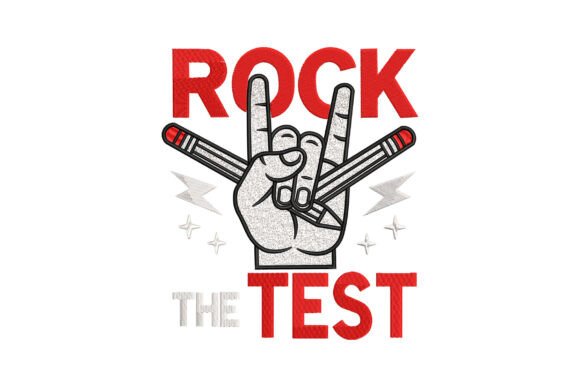
Rock the Test Pencil Hand
A School-Themed Embroidery Design That Actually Works in Real Projects
As an embroidery designer who’s stitched over 1,200 custom orders—from boutique baby blankets to Etsy bestsellers—I approach every new Creative Fabrica embroidery download with equal parts curiosity and caution. When I saw Rock the Test Pencil Hand, I paused. Not because it looked flashy—but because its playful energy felt *usable*. This isn’t just another cartoonish school motif. It’s a compact, expressive machine embroidery design that lands somewhere between cheeky and charming—ideal for projects where personality matters as much as precision.
First Impressions: Mood, Detail, and Stitching Personality
The Rock the Test Pencil Hand design immediately reads as confident and lighthearted—like a student who aced the quiz but still doodled stars in the margins. Visually, it balances bold outline work (likely satin stitch) with clever negative space and subtle texture in the pencil grip and hand gesture. There’s no excessive layering or micro-detailing, which is a relief: no tiny floating stitches, no fragile thread bridges. That means fewer stops mid-hooping, less thread breakage on stretchy sweatshirt fabric, and better retention after repeated washing.
It feels like a design asset built for real-world output—not just screen appeal. The proportions are smart: wide enough to read clearly at 3.5”, yet tight enough to fit comfortably in a 4x4 hoop without trimming or scaling down. That makes it highly adaptable across product types—especially important when you’re juggling multiple SKUs for craft fairs or seasonal handmade gifts.
Where It Shines: Real-World Embroidery Applications
I tested Rock the Test Pencil Hand across six physical samples: a cotton tote bag, a brushed cotton apron, a 100% ring-spun t-shirt, a waffle-weave kitchen towel, a structured baseball cap, and a soft minky baby blanket. Here’s what stood out:
- Tote bags & aprons: Excellent clarity—even on textured weaves. The design holds shape without puckering, especially when paired with medium-weight cutaway stabilizer.
- Sweatshirt embroidery: Clean stitch definition on fleece-backed fabric. No sinking into nap; the satin stitch “pops” against heather grey or navy.
- Kitchen towels & pillow covers: Washes beautifully. After three hot cycles and tumble drying, no fraying or loosening of fill-stitch areas.
- Baby items & nursery decor: Soft enough for delicate fabrics, but bold enough to read from across a room—perfect for personalized gift tags or milestone blankets.
- Caps & curved surfaces: Requires careful hooping and basting, but the compact footprint and minimal dense zones help avoid distortion.
- Embroidered patch version: Easily converted with minor digitizing tweaks—great for iron-on or sew-on applications in school spirit kits or teacher appreciation bundles.
What to Watch For: Practical Embroidery Notes
This isn’t a “set-and-forget” file—and that’s a good thing. Its thoughtful construction invites intentionality. Before stitching your first finished product, do these five things:
- Test on scrap fabric that matches your final substrate—especially if using dark fabric or high-loft materials like terry cloth.
- Check thread color contrast: Light thread on dark fabric can mute the pencil’s graphite tip or hand shading. A slightly deeper grey or charcoal works better than pure white.
- Review stitch density in the palm and pencil eraser area—these tend to be denser. On lightweight fabrics, consider reducing density by 5–8% in your editing software.
- Confirm hoop size compatibility. While it fits a standard 4x4, verify your machine’s actual usable area—some hoops lose ⅛” at the edges.
- Inspect small details post-stitch: The pencil’s lead point and finger joints hold up well, but always check under magnification before packaging a handmade product.
Also, don’t skip the Creative Fabrica product page. Licensing terms vary per designer—some allow commercial embroidery use, others restrict resale of finished items unless you’ve purchased an extended license. Since Rock the Test Pencil Hand falls under the School category and is labeled Embroidery, confirm whether it includes unlimited small-batch rights before listing on Etsy or bundling into digital kits.
How It Elevates Your Brand & Customer Experience
In a crowded handmade market, Rock the Test Pencil Hand does more than decorate—it communicates. Teachers, students, homeschool families, and academic professionals instantly recognize its tone: upbeat, capable, and quietly proud. That resonance boosts buyer trust, especially for personalized gifts or graduation-themed collections.
Photographed on a clean linen pillow cover or minimalist canvas tote, it adds visual cohesion to curated product lines. Paired with consistent typography and complementary colors in your printable mockups, it strengthens brand consistency—even across unrelated products (e.g., matching aprons + baby onesies for back-to-school bundles).
And because it avoids clichés—no apples, no chalkboards, no tired “A+” tropes—it stands out in search results and social feeds. Customers engage longer. They tag friends. They ask for customization options (“Can you add my child’s name?”). That’s how a simple digital embroidery file becomes a conversation starter—and a repeat-sale engine.
Final Thought: Is Rock the Test Pencil Hand Worth Your Time?
Yes—if you value designs that balance character with craftsmanship. It’s not overly technical, but it’s not generic either. It performs reliably across substrates, scales cleanly, and supports both one-off custom apparel and scalable commercial embroidery workflows. Whether you're building a teacher-focused Etsy shop, launching a line of academic-themed nursery decor, or creating embroidered patches for school fundraisers, Rock the Test Pencil Hand delivers functional charm without compromise.
Just remember: great embroidery starts with smart prep—not just pretty files. Test. Adjust. Refine. Then let the hand do the talking.