Greek Script Embroidery Font - Medium
First Impression: Elegant, Personal, and Quietly Distinctive
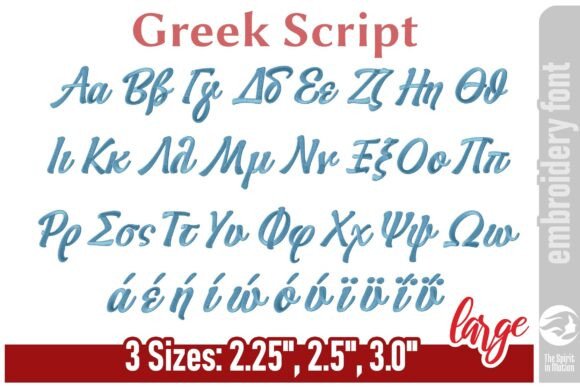
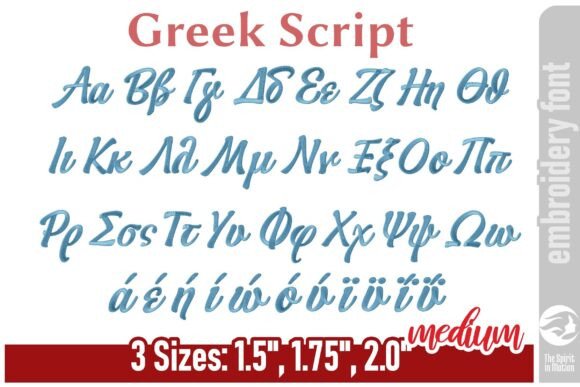
As an embroidery designer who’s set up at over 40 craft fairs—from Portland’s indie maker markets to Charleston’s historic holiday bazaars—I know exactly what stops a browser in their tracks. Greek Script Embroidery Font - Medium doesn’t shout. It leans in. With its elegant handwritten letters and full diacritics, it reads as premium, personal, and deeply human—not digitized, not generic. It’s not farmhouse, not modern-minimal, not rustic or festive. It’s elegant handwriting: the kind you’d see on a hand-lettered invitation from a Greek family wedding, or stitched delicately onto a linen tea towel gifted for a graduation. That nuance matters. In a booth crowded with bold script fonts and cartoonish motifs, Greek Script Embroidery Font - Medium stands out by being quietly confident—ideal for buyers seeking meaning, heritage, or quiet sophistication.
Where It Shines: Craft Fair Product Pairings That Convert
This isn’t a one-size-fits-all embroidery file. Its strength lies in intentional pairing. On tote bag design, it works best centered low on natural canvas or oat-colored linen—just above the seam—where the flowing letters gain breathing room and rhythm. As apron embroidery, it sings on the bib panel of a heavyweight cotton apron: legible at arm’s length, graceful up close, and instantly evocative of artisanal care. For tea towel embroidery, choose smooth, tightly woven cotton (not terry or looped textures)—the script needs clarity, not fuzz. A single name or short phrase like “Φίλος” (friend) or “Αγάπη” (love) stitched in soft ecru thread on ivory linen reads like heirloom quality.
Embroidered patch use is smart—but only when scaled to 3–4 inches wide. Smaller patches lose the delicate curves and diacritic marks. On caps, avoid the curved front panel entirely; instead, place it cleanly on the back strap or side gusset where surface tension stays even. For pillow covers and small pouches, Greek Script Embroidery Font - Medium performs beautifully as a subtle accent—think lower corner of a velvet pillow or center-back of a drawstring linen pouch. It adds narrative without overwhelming. And yes—it photographs exceptionally well for Etsy seller listings and printable mockups: clean lines, high contrast potential, and inherent warmth translate effortlessly to screen.
Production Reality Check: What Works—and What Needs Caution
This is a machine embroidery design that rewards attention to detail. Its elegance comes with responsibility. Tiny diacritics (like breathings and accents) are charming—but they’re also vulnerable. On textured towels or thick denim, those marks can vanish into the pile. On dark fabric, fine light threads may lack contrast—so always test thread colors on your actual base material before batch production. Stitch density is moderate, but tight letter spacing means you’ll want a stable stabilizer—cutaway for stretchy knits, tear-away for crisp cottons. Avoid dense stitch clusters on curved surfaces (like cap fronts) or overly stiff fabrics—the design wasn’t built for compression distortion.
It’s not ideal as a tiny accent—below 1.5 inches tall, the script blurs. But scaled to 2.5–4 inches, it becomes highly repeatable for batch production. That’s key for craft fair sellers: one well-tested setup yields consistent results across 20 tote bags or 30 tea towels. As a digital embroidery file, it’s versatile—but don’t assume it’s license-free for commercial embroidery. Always confirm licensing terms before selling finished product, especially if marketing to schools or Greek cultural organizations (relevant given its School category placement).
Booth Impact: How It Elevates Your Handmade Product Story
In person, Greek Script Embroidery Font - Medium does three things exceptionally well: it invites touch, sparks curiosity, and signals intentionality. Customers pause—not because it’s loud, but because it feels *chosen*. They ask, “What does it say?” “Is it real Greek?” “Can I get my daughter’s name in this?” That engagement is gold at a craft fair. It transforms a simple small shop product into a conversation starter and memory anchor. Paired with natural fibers and muted palettes, it reinforces handmade quality and brand consistency—no logo needed. Your booth feels curated, not cluttered.
For Etsy sellers and boutique makers, it adds depth to collections focused on meaningful gifting—graduation, baptism, language learning, or heritage celebration. It fits seamlessly into themes like “Greek Life,” “Academic Keepsakes,” or “Thoughtful Teacher Gifts”—making cross-selling easier. And because it’s rooted in real script—not decorative mimicry—it avoids trend fatigue. This isn’t a passing fad font. It’s a lasting design asset.
Designer Notes You Can’t Skip Before Cutting Thread
- Test the design on scrap fabric—same weight, same dye lot, same finish—as your final product.
- Check thread contrast under both daylight and booth lighting. A pale gold thread may glow on cream linen in sun but disappear under warm market tent lights.
- Review spacing between letters manually—even small kerning shifts affect readability at scale.
- Confirm hoop size compatibility before loading. Some versions may require larger hoops than standard 4x4.
- Inspect stitch density in tight curves and diacritics using your machine’s preview mode.
- Use the right stabilizer—and don’t skimp. Under-stabilizing ruins flow; over-stabilizing kills drape.
- Create at least one real mockup—not just a digital preview. See how it moves, folds, and catches light.
- Compare fabric colors side-by-side: ivory vs. oat vs. natural—subtle differences change perceived elegance.
- Confirm commercial licensing before selling any finished product. When in doubt, contact the designer or marketplace directly.
Greek Script Embroidery Font - Medium isn’t just another embroidery file. It’s a quiet differentiator—a way to signal craftsmanship, cultural resonance, and thoughtful curation in a single line of stitching. Used intentionally, it turns everyday handmade products into keepsakes. And in the world of craft fairs and handmade markets? That’s how loyalty begins.