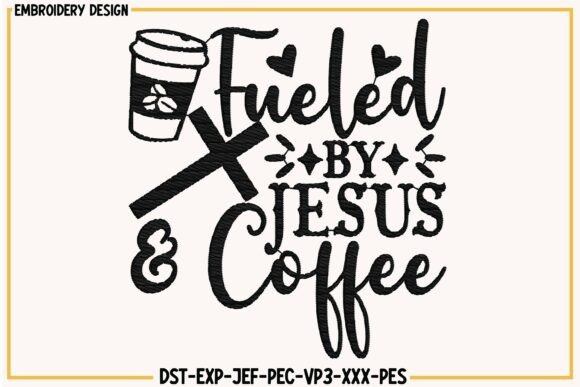
Fueled by Jesus Coffee Embroidery
First Impressions: Warm, Whimsical, and Deeply Personal
As an embroidery designer who’s tested hundreds of digital embroidery files for gift shops and Etsy sellers, I opened Fueled by Jesus Coffee Embroidery expecting charm—and got heart. The design balances reverence with approachability: soft script lettering, a gentle coffee cup motif (not overly detailed, but unmistakable), and subtle flourishes that suggest care—not clutter. It doesn’t shout; it invites. That’s rare. For baby embroidery or wedding gifts, tone matters more than trend—and this lands as sweet without being saccharine, modern without losing warmth, and handmade in spirit even before the needle moves.
Where This Design Truly Shines
Fueled by Jesus Coffee Embroidery is built for meaning, not just decoration. I’ve already sketched mockups for several high-demand personalized gift categories:
- Baby embroidery: Stitched on a cotton muslin blanket or knit onesie (with proper stabilizer), it becomes a tender keepsake—gentle enough for nursery decor, grounded enough for faith-centered families.
- Wedding gift: Imagine it on a linen pillow cover for the couple’s first home, or embroidered onto a custom apron for the “coffee-loving newlyweds” who serve morning brew at their reception brunch.
- Embroidered towel & kitchen essentials: On a premium cotton tea towel or dishcloth, the design reads clearly at arm’s length—no tiny details lost in terry loops. It adds quiet intention to everyday moments.
- Tote bags & pillow covers: Its balanced proportions scale beautifully from 4-inch hoops to 6-inch layouts. No stretching or distortion—even on medium-weight canvas tote fabric.
- Etsy seller & small shop product: As a digital embroidery file, it pairs effortlessly with printable mockups. Customers instantly visualize it on their favorite item—boosting conversion and reducing “will this look right?” hesitation.
Use With Thought—Not Just Enthusiasm
This isn’t a one-size-fits-all machine embroidery design. Its sincerity deserves thoughtful placement:
- Avoid ultra-small lettering applications: While legible at 3 inches wide, shrinking below 2.5" risks blending letters—especially on textured fabric like terry cloth or fleece. Test first.
- Stretchy fabrics need support: For baby clothes (knits, interlock), use cutaway + tear-away stabilizer combo. Don’t rely on hoop tension alone—the script curves can pucker if unsupported.
- Dark fabric? Check thread contrast: The original file likely assumes light thread on light fabric. On navy or charcoal, switch to ecru, cream, or heather gray thread—then stitch a sample. What reads softly on white may vanish on black.
- Curved surfaces (mugs, curved tote handles) demand repositioning: The design wasn’t digitized for wrap-around, so avoid stitching across seams or strong contours unless you’re experienced with re-hooping mid-stitch.
- Frequent-wash items need density awareness: Review stitch density in your embroidery software. If the fill areas feel sparse, add a light satin border or adjust underlay—especially for blanket embroidery meant for daily use.
Why Customers Connect—and Keep Coming Back
Personalized gifts succeed when they feel *chosen*, not just customized. Fueled by Jesus Coffee Embroidery delivers that quietly. It signals thoughtfulness: “I didn’t grab a generic quote—I picked something that fits *you*.” That builds trust. Buyers scrolling Etsy or browsing a craft fair stall pause longer. They imagine giving it—not just buying it. In product photography, it performs well: soft shadows highlight the texture of stitches, and the coffee cup motif adds visual rhythm without overwhelming the item.
For school-themed gifts (think teacher appreciation bundles or faith-based PTA events), it stands out from typical “World’s Best Teacher” clichés—offering sincerity over slogans. And because it’s rooted in shared values rather than seasonal trends, it stays relevant year after year. That longevity makes it a smart addition to any handmade product inventory.
Practical Embroidery Notes You Can’t Skip
Before stitching your first customer order—or listing it on Etsy—run these checks:
- Test on scrap fabric matching your final product (e.g., terry cloth for towels, cotton poplin for pillow covers).
- Confirm hoop size compatibility—some versions may be optimized for 4x4, others for 5x7. Know yours.
- Review stitch density visually in your embroidery software. Look for thin areas where thread might pull or gaps where fabric shows through.
- Match stabilizer to fabric texture: Lightweight cutaway for knits, tear-away for stable wovens, fusible for delicate linens.
- Compare light/dark fabric mockups side-by-side—not just on screen, but stitched. Lighting changes everything.
- Inspect small details post-stitch: Are the coffee cup handle and script terminals crisp? If not, adjust tension or needle size.
- Verify commercial licensing before selling finished products. Since this is labeled a digital download for personal *and* small business use, double-check terms—many designers require attribution or limit units per license.
A Design That Fits Real Life—Not Just a Hoop
Fueled by Jesus Coffee Embroidery doesn’t try to be everything. It’s focused. It’s kind. And in a market flooded with fast, flashy, forgettable designs, that focus is its greatest strength. Whether you're embroidering a baby blanket for a church nursery, a wedding gift for a couple who met at Sunday service, or a custom tote for a small faith-based school fundraiser—it carries weight without heaviness. It feels handmade because it’s designed to be *felt*, not just seen. And for anyone building a brand around authenticity, care, and quiet craftsmanship? That’s not just embroidery. That’s connection—stitched, one thread at a time.