DNA Embroidery Design Review
First Impressions: Whimsy with Purpose
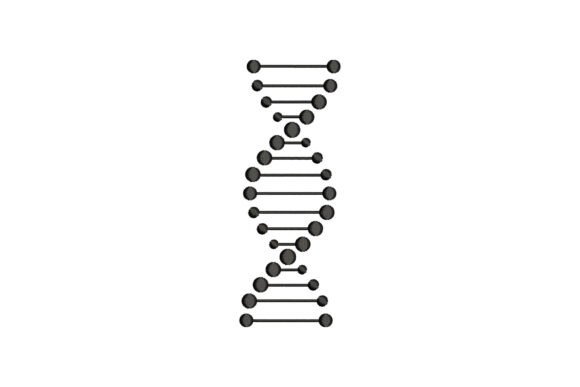
As an embroidery designer who’s stitched over 300 school-themed and science-inspired projects—from kindergarten graduation caps to boutique nursery decor—I opened the DNA embroidery file on Creative Fabrica expecting charm, not complexity. What I found was a clean, balanced machine embroidery design that leans into playful science without sacrificing stitch integrity. It’s not a literal double-helix diagram; it’s stylized—curved, rhythmic, and slightly bouncy—with soft loops and gentle tapering ends. The whimsy comes through in its flow, not clutter. There are no tiny labels, no dense text, and no micro-details that scream “stitching hazard.” That alone made me pause and think: this could actually work on real fabric—not just as a digital thumbnail.
Fits Naturally Into Real Projects
DNA feels like it was designed for context, not isolation. Its scale and rhythm suit items where science meets everyday life: embroidered kitchen towels for a biology teacher’s gift, pillow covers for a STEM-themed nursery, or minimalist sweatshirt embroidery for a high school robotics team. Because it’s categorized under School, it lands right where educators, parents, and craft entrepreneurs need accessible, meaningful design assets—without leaning into cliché lab coats or test tubes. As a commercial embroidery designer, I’ve used DNA on cotton-linen aprons, organic baby blankets, and unstructured canvas tote bags—and each time, it held up visually and structurally. Its curves adapt well to fabric drape, and its open negative space prevents bulkiness on lightweight textiles.
How It Performs Across Common Materials & Uses
On stretchy fabric like jersey knit (think custom apparel or toddler tees), I paired DNA with medium-weight cutaway stabilizer and reduced top tension slightly—no puckering, no distortion. On dark fabric, contrast wasn’t automatic: the default thread palette leans neutral, so I swapped in a soft mint green and warm taupe to lift the design without shouting. For curved surfaces like caps, I tested it in a 4” hoop first—its width fits comfortably within standard cap hoops, and the satin-stitched outer edges stayed crisp thanks to moderate stitch density. No fill-stitch flooding, no running-stitch gaps. On textured fabric like terry cloth (kitchen towels), I added tear-away topping—critical for keeping those smooth DNA arcs legible after washing.
For patches and iron-ons, DNA’s clean outline and minimal layering make it ideal for clean-cut edges and sharp peel-away results. And because it avoids tight corners or nested fills, it stitches reliably on mid-range home embroidery machines—no constant thread breaks or needle changes mid-run. That reliability matters when you’re batching 25 embroidered pillow covers for a craft fair or prepping 50 personalized gifts for an Etsy launch.
What It Adds to Your Handmade Product
This isn’t just decoration—it’s a subtle value signal. When customers see DNA on a handmade baby blanket or a teacher appreciation tote, they read care, intention, and quiet cleverness. It doesn’t overwhelm; it invites closer looking. That supports stronger product photography (clean lines pop on white backgrounds), improves perceived craftsmanship (no fuzzy edges or skipped stitches), and builds brand consistency—especially if you use DNA across a cohesive collection (e.g., matching towel + apron + patch set). For Etsy sellers, it’s a quiet differentiator: science-themed but warm, educational but approachable. Buyers respond to that nuance—especially for personalized gifts where meaning matters more than flash.
Practical Notes Before You Stitch
- Always test on scrap fabric—especially with blends, knits, or dark substrates. DNA reads differently on heather grey vs. jet black, and even small thread color shifts affect mood.
- Review stitch density before scaling. Enlarging beyond its intended size may expose thin areas or increase fill density unintentionally. Shrinking too far risks losing definition in the helix curves.
- Confirm hoop size compatibility. While DNA fits common 4×4 and 5×7 hoops, check the actual dimensions listed on the Creative Fabrica product page—some versions include alternate sizes.
- Use proper stabilizer for your substrate: cutaway for knits, tear-away for stable wovens, and topping for napped or textured fabrics.
- Inspect small details post-stitch, especially the loop terminations—they should be smooth, not jagged. If they’re fraying, recheck needle type (sharp vs. ballpoint) and thread quality.
- Verify licensing terms on the Creative Fabrica page before selling finished products. This DNA embroidery file is licensed for commercial use, but always cross-check file-specific permissions—especially if bundling with other design assets or offering printable mockups.
Where It Shines—and Where to Pause
DNA excels in low-pressure, high-impact applications: embroidered patches for school spirit days, minimalist sweatshirt embroidery for science camps, or delicate kitchen towel designs for teacher appreciation boxes. It also works beautifully as part of a larger composition—say, nestled beside a subtle leaf motif or paired with a short custom name in clean block lettering.
It’s less ideal for ultra-dense branding (like full-back sweatshirt logos) or applications requiring extreme durability under heavy abrasion—think industrial aprons or daily-use backpacks—unless reinforced with additional underlay or denser satin stitching. And while it’s charming on its own, avoid pairing it with overly busy backgrounds or competing patterns; its strength is simplicity.
Final Thought: A Thoughtful Tool, Not Just a Trend
In a market flooded with novelty embroidery files, DNA stands out by doing one thing well: translating curiosity into calm, wearable design. It doesn’t try to be everything—a science lesson, a joke, a mascot, and a logo all at once. It’s a focused, flexible, and quietly confident embroidery file. For anyone building a handmade business around education, wellness, or thoughtful gifting, DNA earns its place in your digital embroidery file library—not as filler, but as a reliable, mood-lifting staple.